
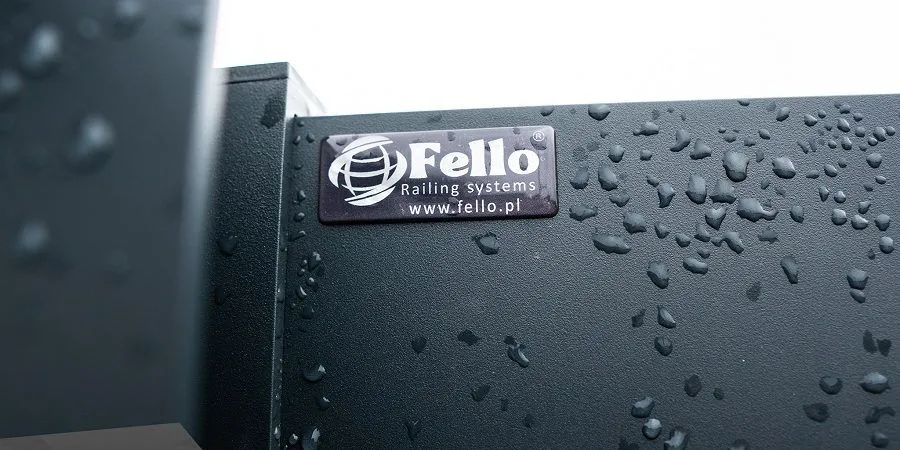
Aluminium is very durable, which is why it is used more and more in construction and beyond. It needs no impregnation or special care and pleases the eye for many years. What is more, it can be painted any colour, and that adds to the durability of an aluminium product. Powder coating aluminium lets us match it perfectly to elements of a facade or a fence. What should you use to paint aluminium? Is it a difficult process? What important steps do you need to remember? Read on to find out how to paint aluminium.
Why is it worth powder coating aluminium components?
Powder coating, above all:
- increases the durability of the painted component,
- improves its resistance to a range of weather conditions (damp and sunlight) and slows oxidation as well as chipping and mechanical damage,
- gives excellent, uniform coverage,
- guarantees a flawless-looking product for many years with no need for impregnation.
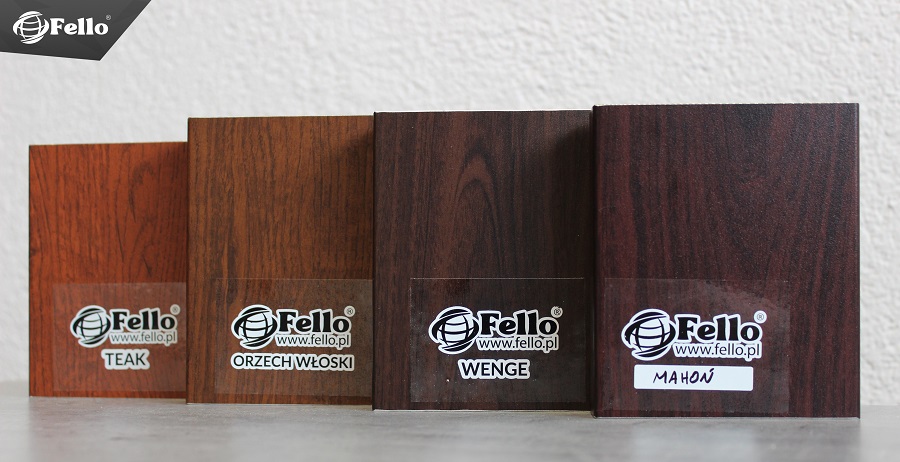
Powder coating is available in a range of shades from the RAL collection or in wood imitation finishes.
What does powder coating involve? Painting aluminium step by step
Staff in the coating shop always work through three stages during powder coating.
- Preparing the aluminium surface for painting: before painting it is worth keying the surface with fine-grade abrasive paper and then cleaning it thoroughly.
- Applying primer and the special paint: time for the coating process. Powder coating is simply the application of particles of a special paint with a gun.
- Curing the paint: the freshly coated aluminium component is then heated to 200 degrees Celsius in an oven designed for the purpose.
It is worth remembering that powder coating (dry painting) is very demanding. Staff in the Fello coating shop are thoroughly trained in how the aluminium painting process works. Experience and working with the best equipment let us achieve satisfying results — products that look new for many years. Client satisfaction matters most to us, which is why all our products (aluminium fences, railings, profiles, louvres, beams, gazebos) are powder coated in house.
The powder method of painting aluminium
Advantages:
- a perfectly smooth surface with no chipping,
- improved resistance to mechanical damage, corrosion and the weather,
- an environmentally friendly method, since powder paint contains no harmful solvents.
Disadvantages:
- specialist equipment is essential,
- experience is needed, and every stage of powder coating has to be worked through properly,
- changing the shade later is very difficult to achieve.
Aluminium components in a wood imitation finish
Besides RAL palette colours, clients can choose a wood-effect pattern that ends up looking convincingly like a real timber board — without troublesome, repeated impregnation. We would go so far as to call it the ideal substitute for the natural material.
Powder coating shop – wood imitation and RAL palette colours
We can assure you that the colours available in our powder coating shop will let you match the shade of a product perfectly to a facade or to other components. We would also encourage you to order free samples.
The most frequently chosen shades from the RAL collection are white, black, graphite sparkle, silver, dark silver, anthracite, dark grey, graphite grey, nut brown, brown, mahogany brown, chocolate brown and grey brown.
Available wood-effect shades: White Wash, Golden oak, Sheffield oak, Pine wood, Yellow pine, Walnut, Winchester, Teak, Deep walnut, Mahogany.
How do you keep aluminium in good condition? How should it be cleaned?
Aluminium needs no particularly complicated care. It is enough to wash an aluminium product from time to time, for example with water and a pH-neutral washing-up liquid. Do it gently, ideally with a soft cloth. Remember to wipe the aluminium surface dry afterwards to avoid streaks or marks. You can also use a pressure washer to clean our railings.
Products that must not be used: corrosive substances (acid-based and alkaline compounds), bleaches, solvents, abrasives and cloths containing metal fibres.