
Aluminium profiles are notably flexible, which is why they are used even in the most unusual projects. They are also highly resistant in harsh weather and to mechanical damage, and on top of that they are easy to fit. Which methods of joining aluminium profiles are used most often? Let us take a look.
Why choose our profiles?
Any shape can be built from aluminium profiles. They work excellently in producing fencing, gazebos and railings. Using aluminium profiles guarantees the durability and stability of the whole structure. Before work begins, the right profiles have to be chosen for the effect you want. Some aluminium profiles are more flexible (flat bars and channels), while others are more hard-wearing depending on the thickness chosen (angles). We hold all of them in our range.
How to join aluminium profiles
There are several ways of joining aluminium profiles, so the method can easily be matched to the conditions. The joint alone, however, will not guarantee a durable structure. Only a proven company can promise resistance over many years, so choose professional manufacturers. Fello offers aluminium profiles of the highest quality.
The most popular joints
Building structures from aluminium calls for knowledge of how to join and fix aluminium profiles. Special holes are created, for example, into which connectors are slid. There are many proven methods that work in particular conditions. Here are a few of them.
The mechanical method
Making mechanical joints with durable bolts, ideally stainless or acid-resistant ones, guarantees a long service life. A joint of this kind gives stability. Bolts are used above all for right-angle joints.
Welding
An alternative to the mechanical method is welding, which does however require special electrodes. The work has to be carried out by a professional, under argon shielding. This method is most often used in air conditioning installation, in the machinery industry and in transport.
Brazing
Another way of joining aluminium profiles is brazing, which produces a sealed joint. It is a method that calls for some experience, but once you are used to it, it can even be carried out at home.
Using connectors
A connector is a quick way of joining identical components. Precisely made connectors guarantee a stable fixing. This method will not work in every situation.
Explore the Fello range
Fello aluminium profiles are the highest quality available on the market. We also offer powder coating in our own shop and a choice of any colour from the RAL palette or a wood imitation finish. We provide cutting services too, so profiles are made to measure. The maximum length of a single section is 600 cm.
Looking through our range you will find a wide choice of profiles. Here is what you can buy from us.
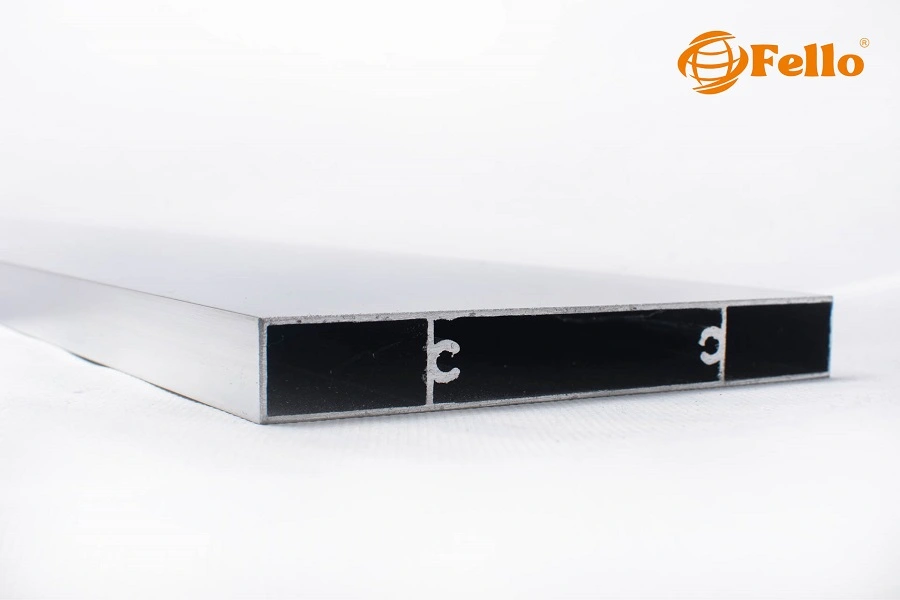
Closed profiles
Closed profiles are available in rectangular or square versions. This product is used both indoors and outdoors, because it resists harsh weather. Closed aluminium profiles work excellently as infill for a railing, a fencing span, an entrance gate or a wicket.
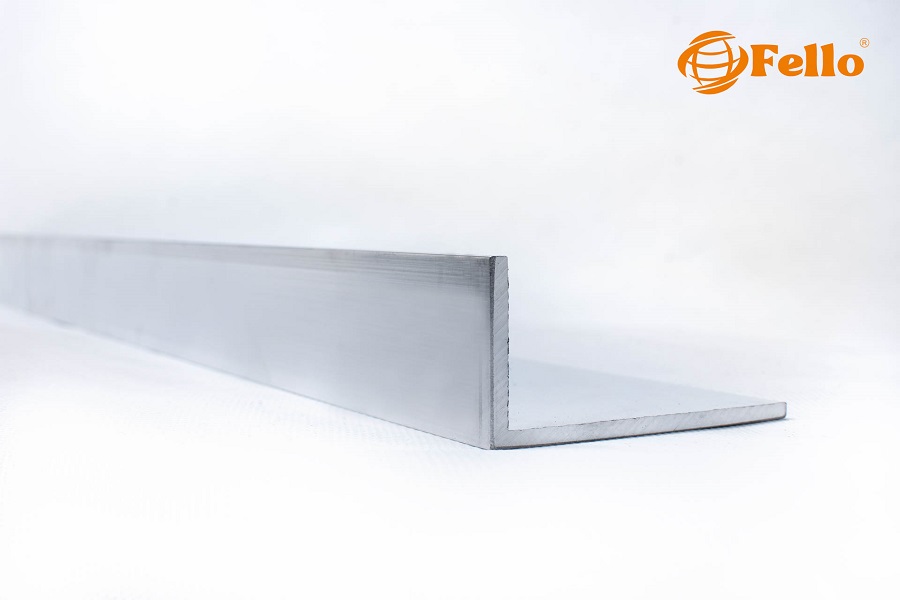
Aluminium angles
Angles are used mainly for joining. This is an L-shaped profile that can act as the connector for a whole structure (a partition, for example).
Aluminium flat bars
Flat bar is very flexible, so a variety of durable forms can be created with it. The standard length of flat bars is 4,000 mm. Aluminium flat bars are suitable for joining structures or for covering unwanted openings.
Aluminium channels
We cut suitable lengths to the client’s needs. We offer products of the highest quality, distinguished by their high durability. They are used in a range of industries — construction, furniture, automotive, telecommunications, rail and even signage.