
MODERN MADE-TO-MEASURE PREMIUM PANELS
Laser cut fencing panels are modules from which you can assemble a fence matched perfectly to the shape of the building and the character of the property. Every panel is produced from laser-cut aluminium sheet, so you decide how it looks — from the pattern to the colour. This is a solution for clients who treat a fence as part of the architecture, not as a ready-made product from a catalogue.
Key information:
Premium aluminium – resistant to the weather
Made to measure (up to 1440 × 2940 mm, or to individual sizes)
3 mm aluminium sheet
Ready-made and individual laser patterns
The full RAL colour palette (powder coating)
Explore the possibilities of fencing panels
The visualisations below show how fencing panels can be combined into different arrangements and patterns. We match every panel to the dimensions and the style of your fence.
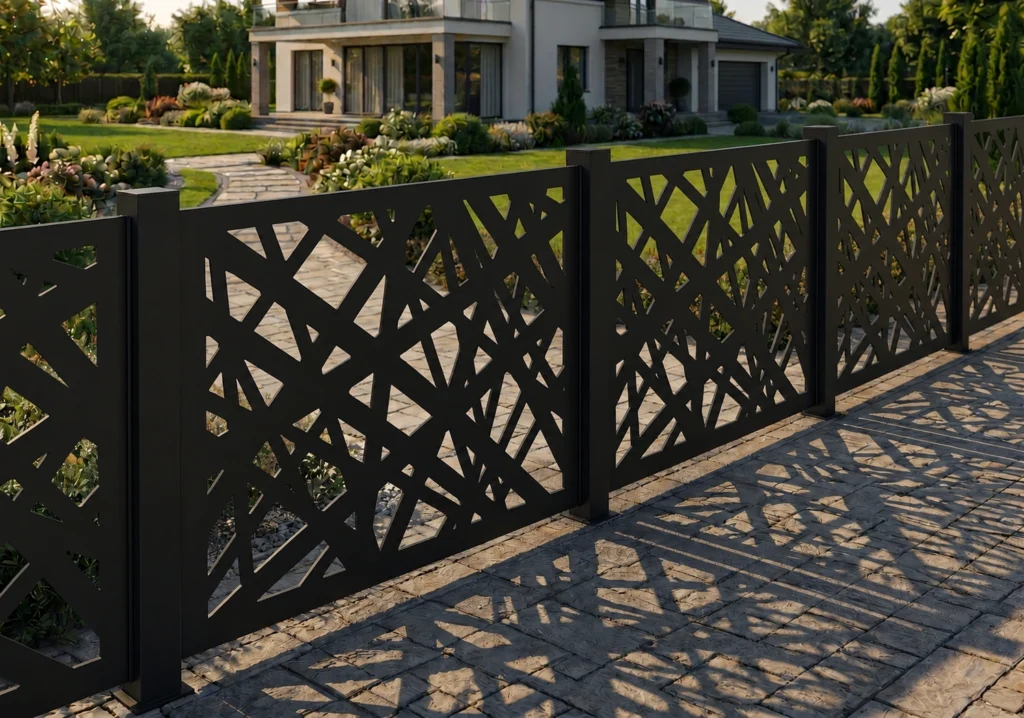
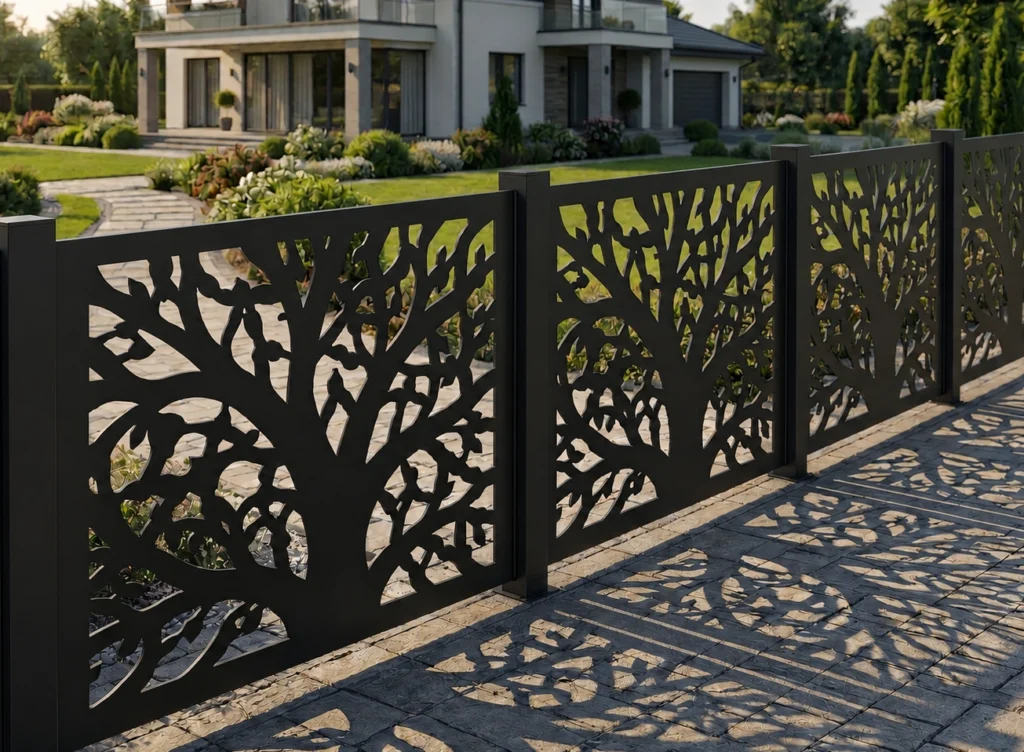
Decorative and traditional fencing panel patterns
The pattern gives the panels their character and determines their decorative effect. Depending on the design they can reference a modern or a more traditional style, creating coherent, stylish laser-cut fencing matched to the architecture of the property. The panels are produced from a precise design using laser technology, which delivers a very accurate and repeatable result. Every component is made to close tolerances, so the whole is attractive and practical at the same time. The most commonly used solutions include:
- geometric patterns – modern and orderly, suiting minimalist forms and contemporary architecture,
- botanical motifs – more decorative, often chosen for gardens in a natural or traditional style,
- individual patterns – designs created to the client’s order, matched completely to the property.
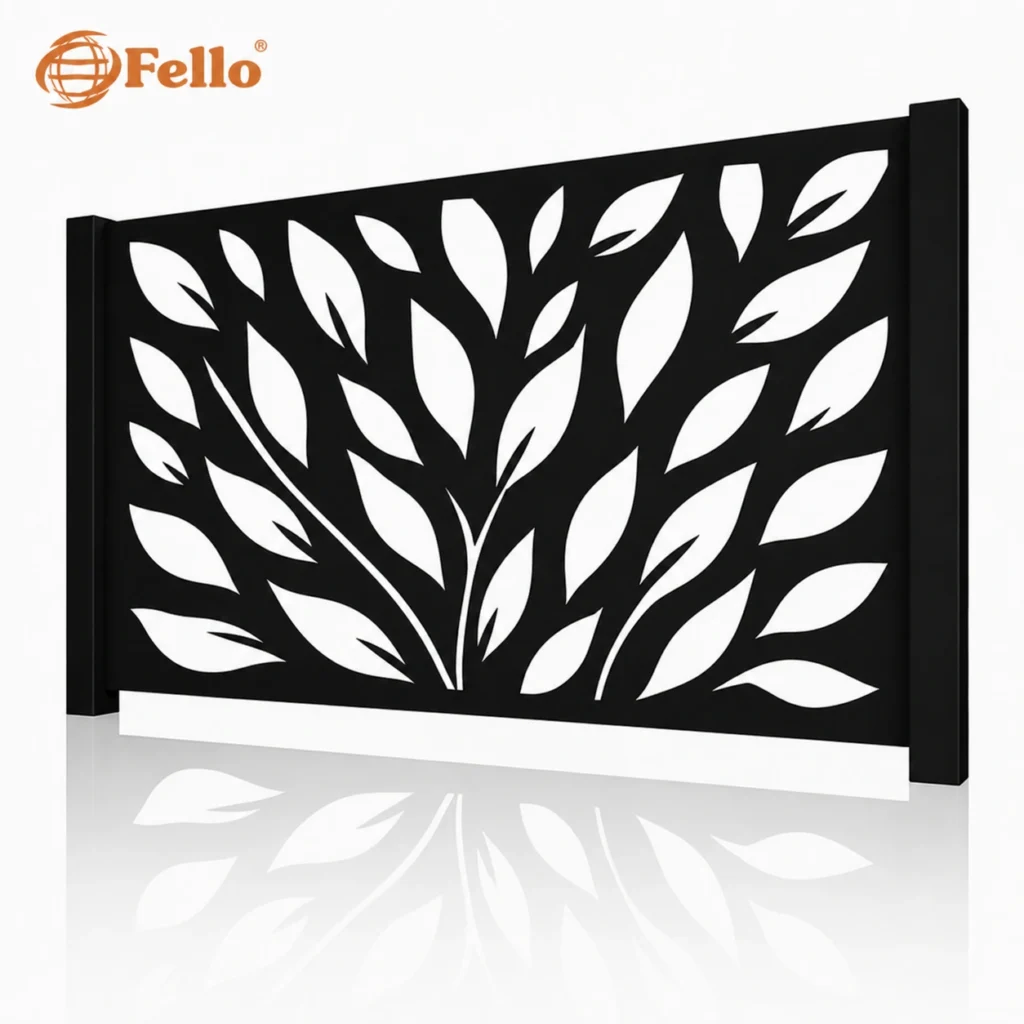
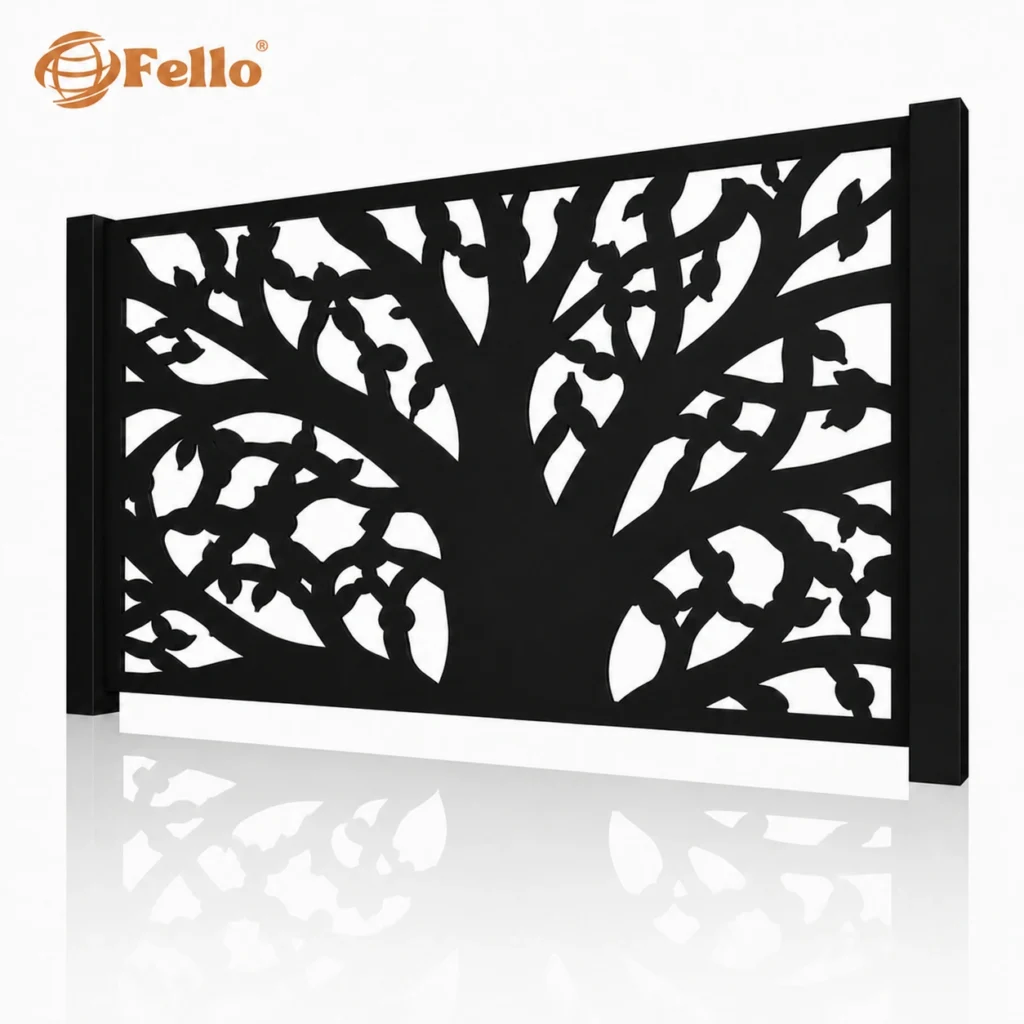
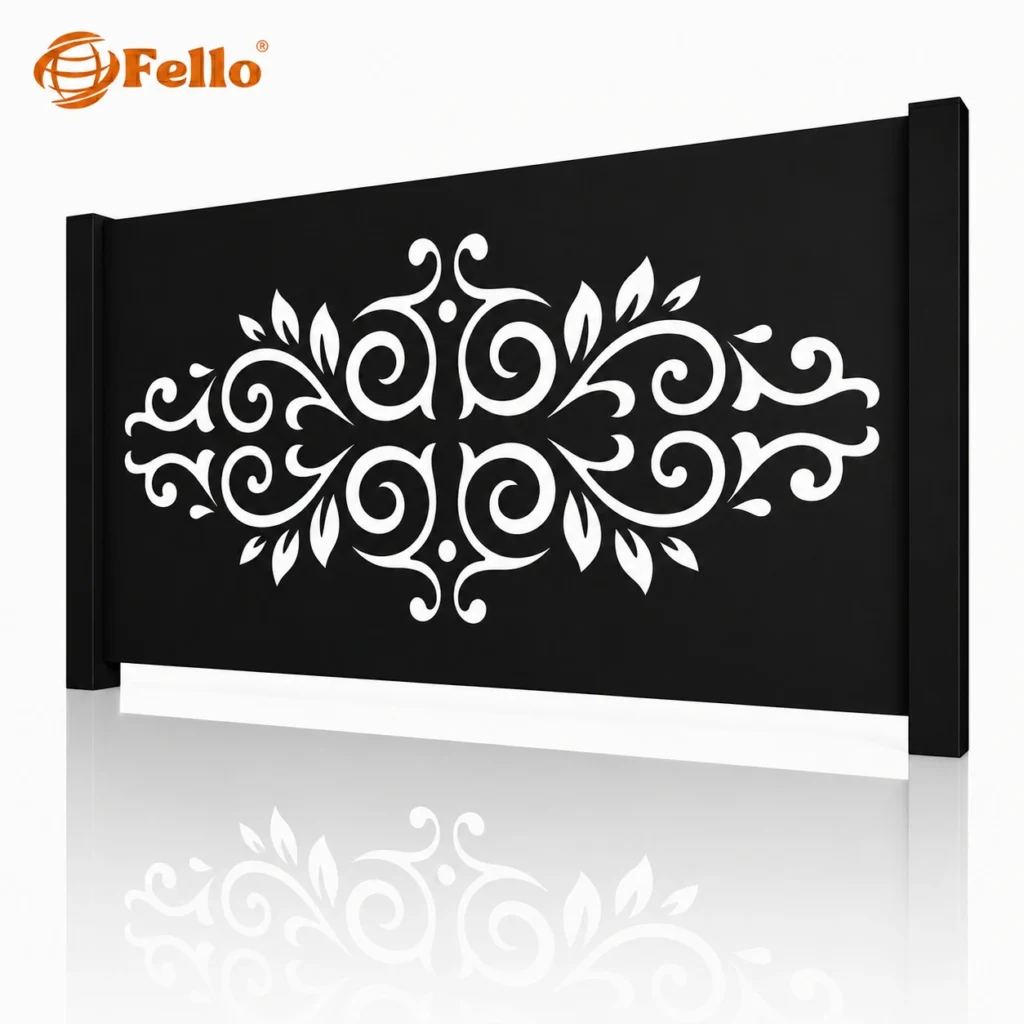
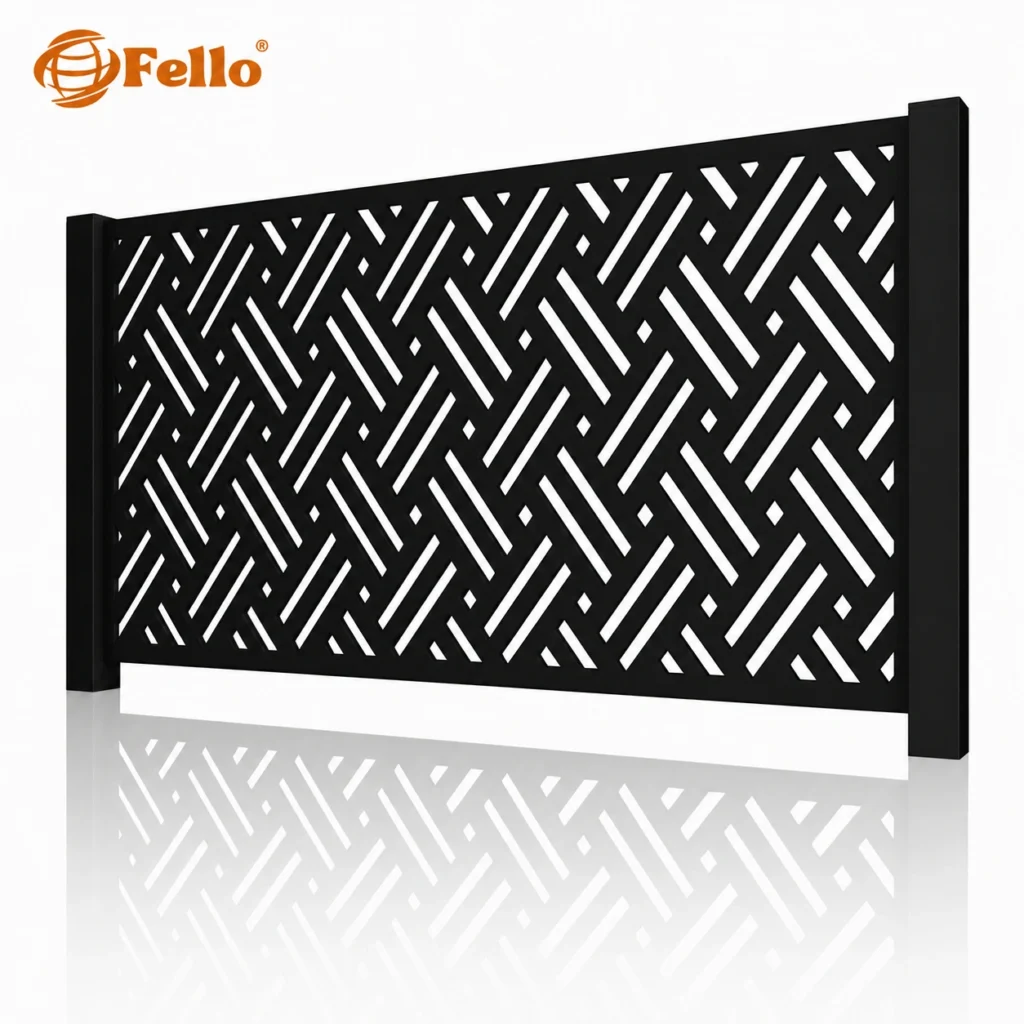
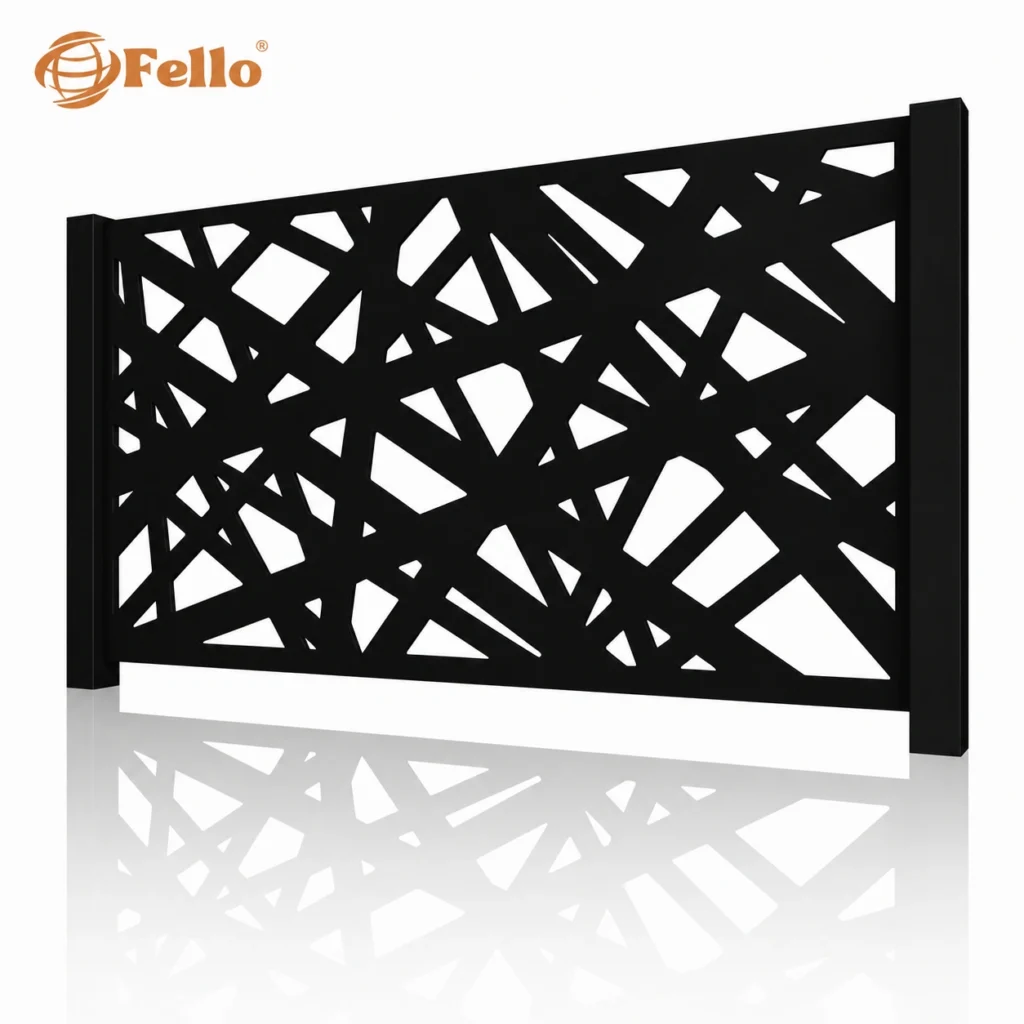
Individual design
Ready-made patterns are a starting point, not a limit. If you have your own idea, you send us a sketch, artwork or a logo, and we check whether we are able to cut it into the panels. Only after this consultation can we say whether your design can be reproduced or whether modifications will be needed.
This is how a fence becomes part of a visual identity — a solution valued at modern homes and commercial developments, where a recognisable detail matters.
The panel production process
- Every pattern is developed digitally, taking into account the dimensions of the module and the way the panels join into a coherent fence. The design then goes to laser cutting, where the motif is reproduced in aluminium sheet with high accuracy.
- Precision cutting gives clean edges and repeatability of components with no need for additional mechanical work. After cutting, the surface is prepared for finishing and then protected with powder paint in the chosen colour from the RAL palette.
- The result is modular panels of high visual quality and durability, ready to be fitted in system or individual fencing arrangements.
Technical parameters of the fencing panels
- material: aluminium
- sheet thickness: 3 mm
- maximum module dimension: 1440 × 2940 mm
- produced using laser technology
- finish: powder coating
- edge treatment after laser cutting, giving a clean and precise result
Modern laser cut fencing – quotation
We quote for panels individually, because every fence has a different length and pattern. The cost is driven above all by:
- the number of panels and the total length of the fence,
- the density and complexity of the pattern,
- the format of the modules,
- the colour from the RAL palette,
- whether the design is ready-made or original.
Fello laser cut fencing panels
The panels are one part of a coherent system. The same pattern you choose for the fence can also be produced on the entrance gate, the wicket and the railings. As a result the front of the property, the terrace and the balcony all speak the same design language.
That kind of consistency is hard to achieve when every component comes from a different supplier. With a single manufacturer you choose the pattern once and carry it across the whole of the external architecture.
Order laser cut fencing panels
Design a fence matched to your property — module by module, in the pattern and colour of your choice. Send us the length of the fence, the pattern and the RAL colour, and we will prepare a quotation and a design for a panel system for your plot.
Get a quote for laser cut fencing panels.
FAQ – frequently asked questions
A laser cut panel plays two roles at once: it separates the property and at the same time serves a decorative function. The openwork pattern lets light and air through, so the fence does not feel oppressive, yet it still orders the space and marks the boundary of the plot. Appearance goes hand in hand with function here. You adjust the density of the motif for privacy, and match the pattern itself — geometric or botanical — to the garden and the shape of the building. The larger the system, the more strongly the coherent, repeating rhythm of panels works along the whole property. Every pattern has to go through careful checking before approval. Unlike steel fences, which need galvanising and powder coating as basic protection, aluminium is naturally resistant to corrosion, and the powder coating serves mainly a decorative role while giving the surface extra protection. The panels are durable, practical and attractive, and laser technology delivers a precise result matched to the style of the whole property.
Start with the architecture of the building and its surroundings. Restrained geometry suits a simple, modern form, while botanical motifs suit a garden with plenty of greenery. Think too about how much privacy you need: a denser pattern screens more, a more openwork one opens the space up. A well-chosen panel combines appearance with function and forms a coherent whole with the facade and the planting.
Laser cut panels are used above all for fencing private properties — as a segmented system running evenly along the whole plot. They also work well in commercial developments and public spaces, where a fence has to combine appearance with durability and bring order to larger areas. Their modular construction makes it easier to work around obstacles, curves and changes in ground level without losing a coherent look along the whole length.